




Business Verification Checklist: How to Avoid Costly Mistakes
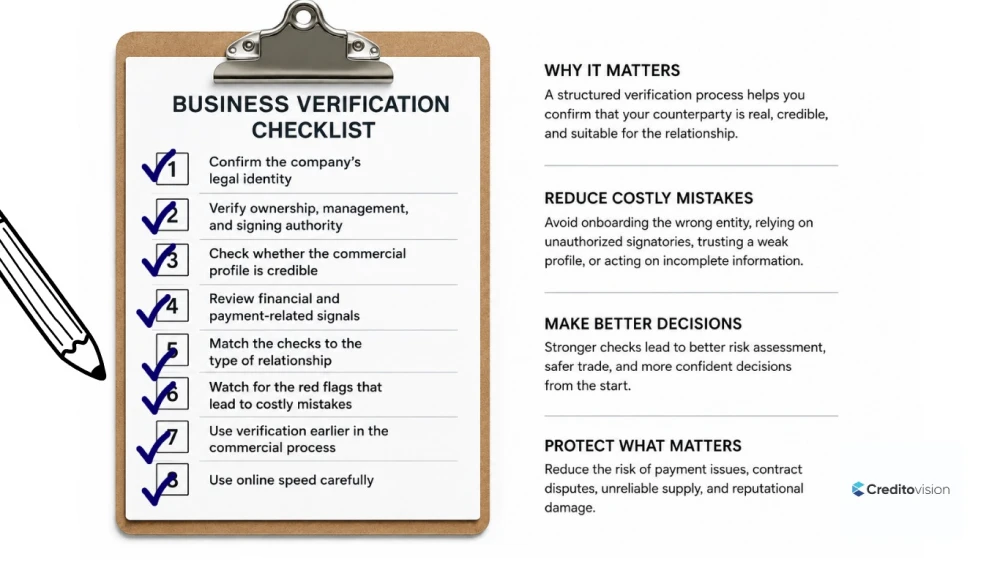
A business verification checklist helps companies confirm whether a counterparty is real, active, credible, and suitable for a commercial relationship before risk turns into loss. In B2B trade, costly mistakes often begin with weak onboarding, incomplete business information, or failure to verify who is actually behind the company.
That is why a structured verification process matters. Before extending terms, approving a supplier, onboarding a customer, or signing a contract, businesses need a clear method for checking identity, authority, commercial credibility, and risk signals. A disciplined review reduces avoidable errors and supports better decisions from the start.
Why a verification checklist matters
A company may appear legitimate on the surface and still create serious problems later. Registration details may be inconsistent, ownership may be unclear, the business may be inactive, or the person negotiating may not have authority to bind the company. In other cases, the company exists, but its profile does not justify the level of trust being assumed.
This is where a proper business verification checklist adds value. It helps companies move beyond assumptions and confirm whether the counterparty is suitable for the relationship being considered. That matters even more when the decision may lead to trade credit, supplier dependency, or long-term contractual exposure.
1. Confirm the company’s legal identity
The first step is to verify that the company exists and is properly registered. Businesses should confirm the full legal name, registration number, legal form, operating status, and registered address. They should also review whether recent structural changes raise questions.
A reliable business information report can support this stage by bringing together verified company background in a structured format. In some cases, a commercial information report may also help clarify ownership, activity, and registration details where direct disclosures are limited or inconsistent.
This step may sound basic, but many costly mistakes happen because businesses rely on website claims, email signatures, or informal introductions instead of verified records.
2. Verify ownership, management, and signing authority
Knowing that a company exists is not the same as knowing who controls it or who can legally commit it. A strong checklist should confirm beneficial ownership where possible, identify directors or managers, and verify whether the person negotiating actually has authority to sign.
This is where reliable commercial information becomes important. Ownership changes, unusual management turnover, or inconsistencies between declared and recorded information can all signal that the relationship deserves closer attention before any commitment is made.
3. Check whether the commercial profile is credible
A company’s stated activity should match its observable profile. If a business claims substantial operations but leaves little evidence of real trading activity, that gap should be reviewed carefully. Verification is not only about formal identity. It is also about commercial credibility.
At this stage, a good business report can help compare declared activity with the company’s broader profile. Reviewing sector, scale, location, and operating history can help identify whether the counterparty appears commercially consistent or whether deeper review is needed.
4. Review financial and payment-related signals
Identity alone does not make a company a safe partner. If the relationship will involve deferred payment, recurring transactions, or meaningful exposure, then financial reliability also matters.
A business credit score can provide a useful starting point when companies want a quick indication of overall risk. However, the real objective is not to rely on a single indicator. It is to understand whether the company appears stable enough for the type of commitment being considered.
For teams that need quick visibility during early screening, an online company credit report can help highlight whether a file appears straightforward or whether it deserves closer review before approval.
5. Match the checks to the type of relationship
Not every counterparty creates the same type of exposure. A customer may create receivables risk, while a supplier may create continuity or dependency risk. A distributor, intermediary, or service provider may create operational or reputational concerns.
That is why a strong checklist should reflect the type of relationship being reviewed. If the company is a critical supplier, for example, a vendor risk check may be just as important as confirming registration details. The right process should fit the real business risk behind the relationship.
6. Watch for the red flags that lead to costly mistakes
A verification process should be designed to identify warning signs before they become expensive. Common red flags include mismatched registration details, unclear ownership, repeated address or management changes, weak evidence of actual operations, and pressure for unusually fast approval.
These signals do not always mean fraud or failure. But they often point to the types of weaknesses that later result in payment issues, contract disputes, unreliable supply, or avoidable reputational damage.
7. Use verification earlier in the commercial process
Verification should not begin only at the final approval stage. Businesses often spend time pursuing counterparties that later prove inactive, unsuitable, or too risky for the intended relationship.
That is why some firms apply screening before final prospect selection or before building a target customer list for outreach in higher-risk markets. Better front-end review improves the quality of opportunities and reduces wasted effort later in the process.
8. Use online speed carefully
Fast access to information is useful, especially when teams need to screen a company quickly. In practice, an online credit report can be a helpful first step in deciding whether a file looks straightforward or needs deeper review.
Still, speed should support judgment, not replace it. The strongest process combines quick access with structured checks, so businesses do not confuse convenience with confidence.
What a strong checklist helps prevent
When used properly, a business verification checklist helps companies avoid the errors that become expensive later. It can prevent onboarding the wrong entity, relying on unauthorized signatories, trusting a weak commercial profile, or moving too quickly on incomplete information.
Most importantly, it helps businesses reduce preventable mistakes before revenue, reputation, or operations are put at risk.
Conclusion
A business verification checklist is most valuable when it helps companies avoid costly mistakes before onboarding, contracting, or extending exposure. When identity checks, authority review, commercial credibility, and risk signals are assessed together, businesses can make better decisions with greater confidence. To support your verification process with dependable credit reporting and company intelligence, visit the Creditovision portal: https://portal.creditovision.com/login